

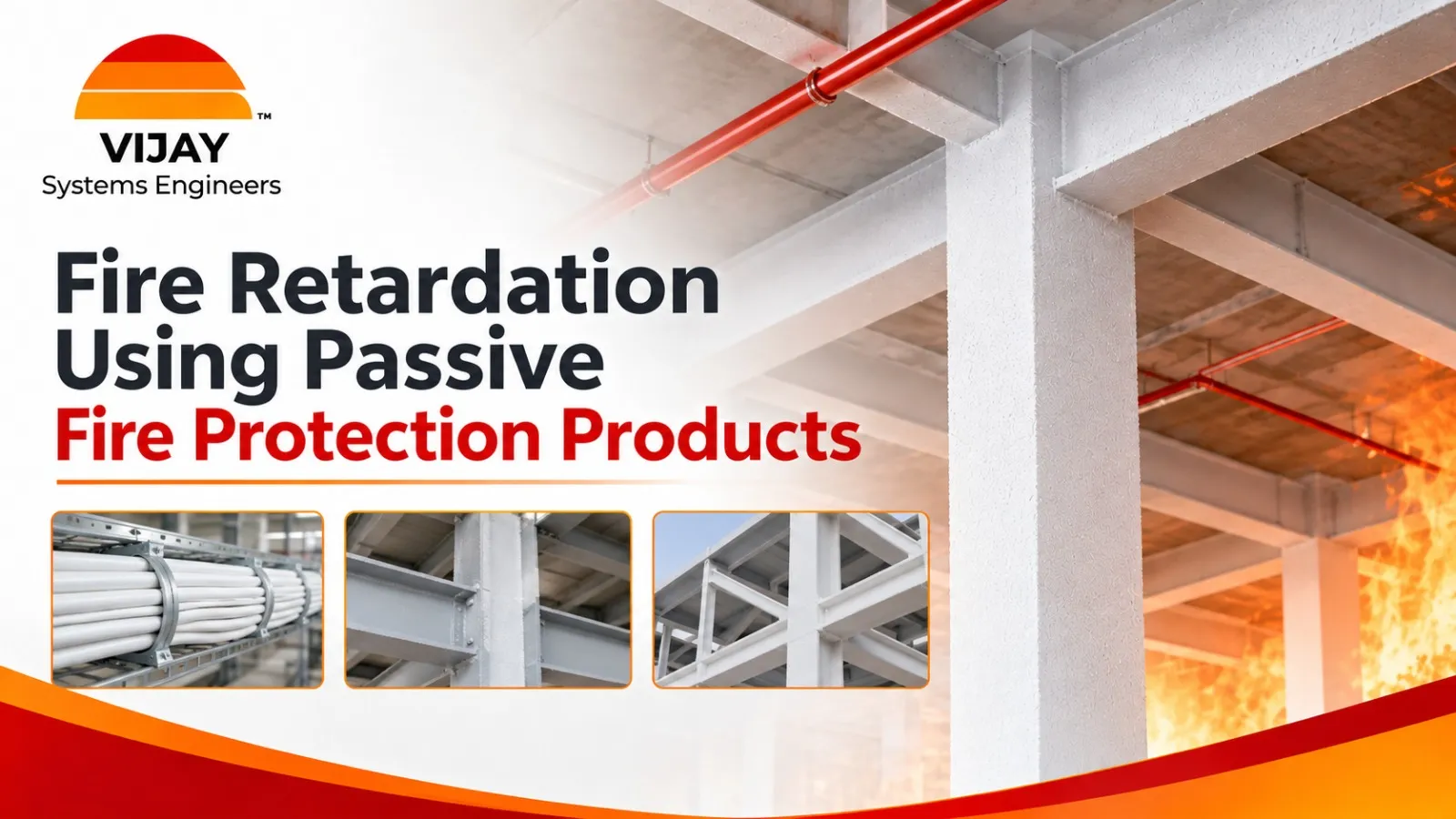
Fire Retardation Using Passive Fire Protection Products
Key Highlights
- Passive fire protection helps slow fire spread by providing extra time to act on fire and protect important building components.
- Fire-retardant coatings are used for different applications, including structural steel and electrical cables.
- Intumescent coatings expand under heat and form an insulating char layer around structural steel.
- Cable-specific coatings help reduce flame propagation along protected cable routes.
- Cement-based coatings provide another option for protecting structural steel.
- Product selection, correct application and regular inspection are essential for expected fire performance.
Understanding the Role of Passive Fire Protection in Buildings
Fire safety involves more than alarms, sprinklers, and extinguishers. Buildings also need systems that can help to slow down the fire propagation rate by providing extra time to act on fire along with compartmentation of fire. This is where passive fire protection is important.
Passive fire protection uses materials and systems that are built into a structure or applied to its components. These systems work without requiring manual activation or an external power supply. They help slow fire spread, protect structural stability and support safer evacuation.
Coatings are one part of this approach. A suitable fire retardant paint can help protect specific surfaces, while specialised coatings are used for structural steel and electrical cables. However, each product has a defined purpose. Choosing the right system depends on the material, fire performance requirement and site conditions.
How Passive Fire Protection Helps Control Fire Spread
Passive fire protection divides a building into sections and helps prevent fire from spreading quickly between them. It can protect structural members, service openings, cable routes and other vulnerable areas.
Its main functions include:
- Limiting flame spread: Suitable coatings can slow the movement of flames across protected surfaces.
- Protecting structural stability: Insulating coatings can delay the heating of steel beams and columns.
- Safeguarding electrical systems: Cable coatings can help reduce the spread of fire along cable trays.
- Supporting evacuation: By delaying fire development or structural failure, passive systems can support the building’s overall evacuation strategy.
- Reducing damage: Fire protection measures can help limit the impact of an incident on surrounding areas.
These systems do not prevent every fire or replace active fire safety equipment. They form part of a wider fire protection plan that includes detection, suppression, emergency exits and maintenance.
What Is the Difference Between Fire-Retardant and Fire-Resistant Coatings?
The terms fire-retardant and fire-resistant are often used together, but they do not always describe the same performance.
A fire retardant coating is designed to delay ignition or reduce the spread of flames across a material. Its performance depends on the coating formulation and the substrate on which it is applied.
On the other hand, fire resistant paint is generally specified for its ability to provide a defined level of fire resistance under tested conditions. The required performance may include limiting heat transfer or protecting a structural component for a specified period.
Fire Retardant coatings are a specialised category. This coating layer slows the transfer of heat to the surface beneath it.
The correct choice should be based on the intended application and supporting test evidence. A product designed for cables, for example, should not automatically be used on structural steel.
Key Passive Fire Protection Coatings and Their Applications
Different building materials respond differently to heat. Therefore, passive fire protection products are developed for specific applications.
1. Intumescent Paint for Structural Steel Protection
Structural steel can lose strength when exposed to the high temperatures of a fire. If its temperature rises significantly, its load-bearing capacity may reduce and affect the stability of the building.
Intumescent paint helps delay this process. When exposed to heat, it expands and creates a thick insulating char layer around steel beams and columns. This layer slows heat transfer and delays the rise in steel temperature.
It is commonly considered for:
- Commercial high-rise buildings.
- Industrial plants and factories.
- Power generation facilities.
- Refineries and petrochemical facilities.
- Data centres and other buildings with steel structures.
The required coating thickness depends on factors such as the steel section, exposure conditions and specified fire resistance period. A tested system should be selected for the actual structural member and project requirement.
2. Fire-Retardant Paint for Cable Protection
Electrical cables connect different areas of a building and carry power to essential equipment. If a cable catches fire, flames may travel along cable trays and spread into adjoining spaces.
Fire retardant paint for cables is developed to help delay ignition and reduce flame propagation along suitable cable systems. It can be considered in facilities with extensive electrical networks, such as power plants, industrial buildings and data centres.
Cable-specific coatings may use ablative technology. When exposed to heat, the coating absorbs energy and forms a protective layer that helps limit fire spread.
A fire retardant cable coating must be suitable for the cable type and intended installation. The coating should not interfere with the cable’s electrical function or be treated as a replacement for cable insulation. Its performance must be supported by relevant testing.
3. Cement-Based Coatings for Structural Protection
Cement-based fire protection systems provide another way to protect structural steel. These coatings form a thicker insulating layer around structural members.
Unlike intumescent systems, cement-based coatings do not rely on expansion to create a char layer. They provide insulation through their applied protective thickness.
Which Standards Should Be Considered When Selecting Fire Protection Coatings?
Fire protection products should be selected using test reports and recognised standards relevant to their intended application. A standard used for structural steel should not be assumed to establish cable coating performance.
Some important standards include:
| Standard | Application or relevance |
| ASTM E119 | Fire-resistance testing of building construction and materials |
| UL 263 | Fire tests of building construction and materials |
| IEC 60332 | Flame propagation testing for electric cables |
| IEC 60331 | Fire-resistance testing for electric cables under specified conditions |
| IEEE 383 | Flame testing of cables used in certain power generation and distribution facilities |
| FM 3971:2021 | Approval standard relevant to certain fire-protective cable coatings |
The National Building Code of India also provides guidance for building fire and life safety. Project teams should confirm the applicable requirements with the fire consultant, approving authority and relevant technical professionals.
A product’s certification must match the proposed application. The test configuration, substrate, thickness and installation conditions should be reviewed before specification.
What Factors Should Be Checked Before Applying a Fire-Retardant Coating?
Even a suitable product may not perform as expected if it is applied incorrectly. Planning and quality checks are important throughout the process.
Consider these factors before application:
- Substrate condition
- Surface preparation
- Application thickness
- Environmental conditions
- Compatibility
- Inspection records
- Maintenance
Professional application and inspection help ensure that the installed system matches the tested specification.
Building a Stronger Fire Protection Strategy with the Right Coatings
Passive fire protection helps buildings prepare for fire by protecting structural elements and limiting the movement of flames through vulnerable areas. However, no single coating can protect every material or solve every fire safety concern. The right solution depends on the building’s design, substrate, risk level and required fire performance.
Vijay Systems Engineers offers coating solutions for structural steel and electrical cable protection, including intumescent, cement-based and ablative systems. Its product range includes options such as VS Steel Coating Intumescent, VS Steel Coating VM and Ace Mastik Coating. By assessing the application, reviewing test documentation and following the specified installation process, project teams can select suitable passive fire protection measures for their buildings.