

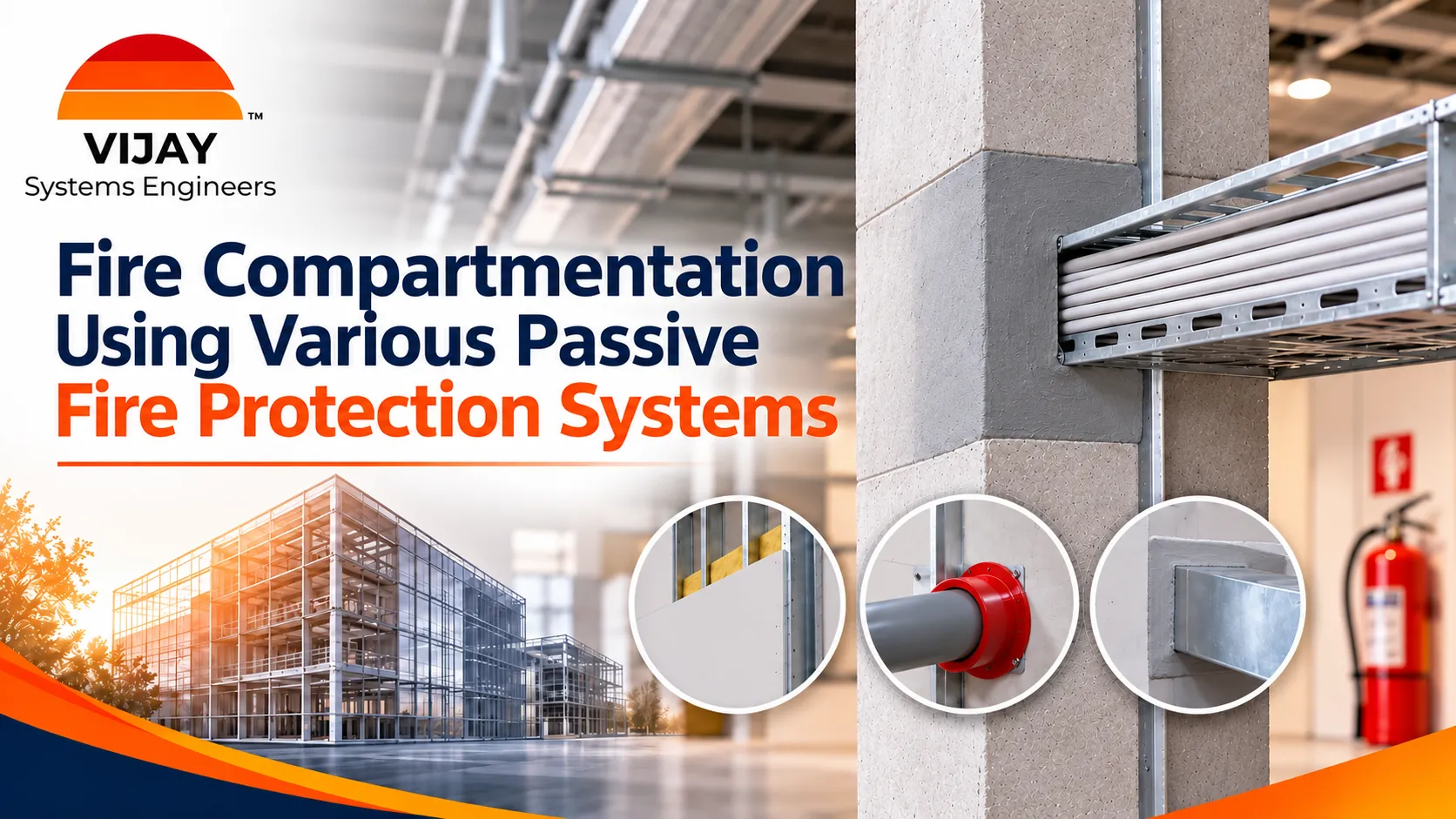
Fire Compartmentation Using Various Passive Fire Protection Systems
Key Highlights
- Fire compartmentation helps restrict the spread of fire, smoke, and hot gases between different areas of a building.
- A well-planned passive fire protection system uses fire-rated walls, floors, barriers, sealants and penetration sealing solutions.
- Fire barrier systems help maintain separation between compartments and protect escape routes.
- Fire stop products seal openings created for cables, pipes, ducts and other building services.
- A suitable fire sealant, (Ablative or Intumescent) must be selected according to the opening, substrate and required fire rating.
- Expertise in this field reinforced the importance of fire safety planning, preventive maintenance and protecting lives through responsible building design.
Why Fire Compartmentation Matters in Modern Buildings
Modern buildings contain extensive electrical networks, plumbing lines, ventilation ducts, and communication services. These services often pass through walls, floors, and ceilings. Although these openings are necessary for building operations, they can create pathways for fire and smoke if they are not properly sealed.
Fire compartmentation addresses this risk by dividing a building into separate sections using fire-rated construction and suitable sealing systems. It helps contain a fire within the area where it starts, giving occupants more time to evacuate and emergency teams an opportunity to respond.
The importance of this approach was reinforced at the Fire and Security Association of India (FSAI) event highlighted electrical fire risks, safety audits, preventive maintenance, and essential protection measures. These concerns show why buildings need effective fire compartmentation alongside electrical safety practices.
How Does Fire Compartmentation Help Control Fire Spread?
Fire compartmentation uses fire-resistant construction and sealing solutions to separate different parts of a building. These divisions help delay the movement of flames, smoke, and hot gases from one area to another.
A properly designed fire barrier can be created through fire-rated walls, floors, ceilings, and other tested assemblies. However, openings for building services must also be protected. Even a small, unsealed gap can compromise the performance of an otherwise fire-rated wall or floor.
Key areas that require attention include:
- Electrical cable penetrations: Openings around cables, conduits and cable trays need suitable firestopping.
- Pipe penetrations: Plastic pipes may soften or melt during a fire, leaving gaps through which fire and smoke can pass.
- Duct openings: Service ducts that cross compartment walls or floors need appropriate protection.
- Construction and movement joints: Gaps between building elements require sealing systems that can accommodate the specified movement.
- Large service openings: Multiple cables, pipes and other services may need panel-based or mortar-based sealing systems.
A suitable passive fire protection approach considers these openings during building design and checks them after installation.
What Are the Main Passive Fire Protection Systems Used for Compartmentation?
Different openings and building materials require different solutions. The choice depends on the service passing through the opening, the size of the gap, the supporting construction, and the required fire resistance.
Fire Barriers for Compartment Separation
A fire barrier helps maintain separation between designated building areas. It may form part of a wall, floor, ceiling, or other fire-rated construction.
Fire barriers are particularly important in hospitals, residential towers, commercial buildings, data centers, and industrial facilities. They help restrict fire spread between areas that may have different uses or levels of risk.
Fire Sealants for Small Gaps and Penetrations
A fire sealant is used to close gaps around service penetrations, joints and other openings. It helps prevent flames, smoke, and hot gases from passing through unprotected spaces.
A suitable fire stopping sealant must be selected according to the type of service, opening size, substrate and tested system. Flexible sealants may be needed where movement is expected, while other applications may require a combination of sealants, mortar or panels.
Intumescent Sealants for Openings and Service Penetrations
An intumescent sealant expands when exposed to high temperatures. This expansion helps close gaps and restrict the passage of flames, smoke, and hot gases.
This type of sealant is useful where the opening needs a material that responds to heat and helps maintain the fire separation.
Various suitable product/solutions provided by Vijay Systems Engineers for different building openings :
The correct product depends on the size and type of opening. Using the wrong material can affect the performance of the complete firestopping arrangement.
VSE Common solutions include:
- Ace Mortar Seal: A cementitious firestop mortar used to seal cable, pipe and other service penetrations through fire-rated walls and floors. It forms an in-situ barrier when mixed and applied according to the specified method.
- Ace Panel Seal: A panel-based solution for larger or more complex openings, including areas with multiple cables, cable trays and metal pipes.
- VS Plastic Pipe Wraps and Collars: These systems use intumescent material around plastic pipe penetrations. When exposed to heat, the material expands to help close the opening left as the pipe softens or burns away.
- Ace Mastik Sealant: A flexible ablative sealant for small gaps and openings around penetrants.
- VS Mastik Sealant-I : An intumescent solution for sealing small gaps and annular spaces around services.
How Should Passive Fire Protection Systems Be Selected and Maintained?
Selecting the right product is only one part of effective compartmentation. The complete installation must be suitable for the building’s fire safety requirements.
Project teams should consider the following points:
- Identify all service openings
- Assess the opening
- Check tested performance
- Follow installation instructions
- Inspect completed work
- Maintain records
A passive fire protection system can lose its effectiveness if later electrical or plumbing work leaves openings unsealed. Any modification to a protected wall or floor should therefore include suitable reinstatement of the firestopping system.
Building Safer Compartments with Tested Fire Protection Solutions
Fire compartmentation is an essential part of a building’s overall fire safety plan. The discussion at the FSAI highlighted how electrical faults, ageing installations, and inadequate maintenance can contribute to serious fire risks. Protecting buildings also requires attention to the routes through which fire and smoke may spread.
Vijay Systems Engineers provides a range of fire barriers, penetration sealing systems, sealants, mortar and panel-based solutions for different building applications. From small service gaps to larger cable and pipe openings, the right product can help maintain compartmentation when selected and installed as part of a tested system.
By combining suitable fire stop products with regular inspections, responsible building design and proper maintenance, project teams can strengthen fire protection and support life safety. Explore Vijay Systems Engineers’ passive fire protection solutions to identify suitable systems for your building’s compartmentation requirements.