

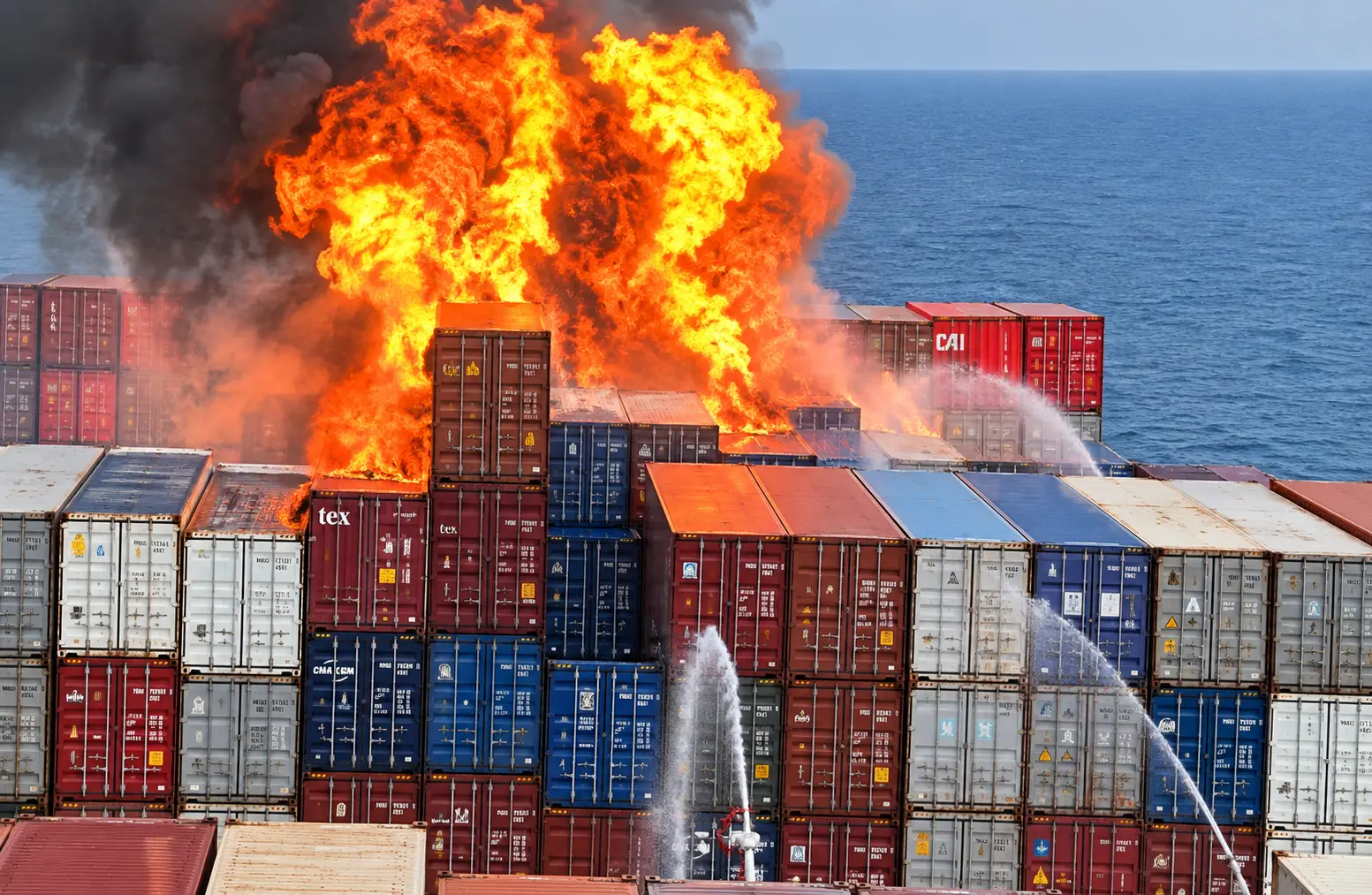
Why Ports and Cargo Terminals Need Fire-Retardant Coating on Structural Steel – Lessons from the Mumbai Port Crane Fire
Key Takeaways
- Ports and cargo terminals depend on structural steel for cranes, platforms, warehouses, pipe racks, sheds and other critical infrastructure.
- Steel does not burn, but its strength and load-bearing capacity can reduce significantly when exposed to high temperatures.
- A suitable fire-retardant coating can slow the rate at which heat reaches structural steel and help maintain its performance during a fire.
- Port environments create additional challenges, including salt-laden air, corrosion, mechanical impact, heavy equipment movement and difficult maintenance conditions.
- The Mumbai Port crane fire on August 30, 2026, injured two operators during a 140-ton cargo lift. The incident highlights the need for layered safety and fire protection.
Ports and cargo terminals must support large weights, large vessels, and large cranes, and they must also transfer moving materials. Most infrastructure within ports and cargo terminals relies on structural steel, primarily because of its strength, ease of construction, and versatility.
However, structural steel has one key weakness when it comes to fire. While steel itself non-combustible as temperature, increase its mechanical properties alter. Once a critical member gets too hot, it might not be able to sustain design loads.
This makes passive fire protection an important consideration for port infrastructure. A properly designed fire-retardant coating can help delay the heating of protected steel and preserve structural performance for a specified period.
The Mumbai Port crane fire shows how quickly heavy-equipment accidents can lead to fires that disrupt operations. It wasn’t reported as a structural fire protection failure, and investigators are still looking into the cause.
What happened during the Mumbai port crane fire?
On August 30, 2026, a crane fire occurred at BPS Berth in Indira Dock, Mumbai Port, during a cargo-handling operation involving the Barbados-flagged vessel M/V Vienna.
Reports indicated that two cranes were lifting approximately 140 metric tonnes of cargo. Preliminary information suggested that the lifting sling became imbalanced or slipped, causing the load to shift towards the second crane. The crane was reportedly lifted off the ground, and its boom struck the vessel before the fire broke out.
Two crane operators were injured in the incident. The Mumbai Port Authority Fire Brigade responded, with help from the vessel crew, and brought the fire under control.
The Indian Express reported that the Mumbai Port Authority subsequently ordered a detailed investigation into the incident and directed corrective and preventive measures.
The key lesson isn’t that structural fire protection alone could have prevented the crane accident, but that ports need multiple protection layers. Safe lifting, inspections, emergency response, and passive fire measures tackle different risks.
Why structural steel is critical in ports and cargo terminals
Structural steel is present throughout modern port infrastructure. It may support:
- Crane structures and supporting frames
- Cargo sheds and warehouses
- Pipe racks
- Platforms and access structures
- Conveyor systems
- Loading and unloading areas
- Utility structures
- Maintenance buildings
- Terminal facilities
Many of these members are essential to the facility’s stability. A fire that affects a primary column or beam can therefore become a structural concern, especially if the fire continues for an extended period.
This is particularly relevant in areas where structural members are located close to machinery, electrical equipment, fuel sources, combustible cargo or other potential fire hazards.
Protecting structural steel isn’t about preventing high temperatures but controlling the temperature increase rate to ensure necessary fire resistance.
What happens to structural steel during a fire?
When steel is exposed to fire, it absorbs heat, raising its temperature and reducing its strength and stiffness. The Steel Construction Institute notes that unprotected steel weakens significantly at high temperatures with continued heating.
Three factors are especially important:
· Loss Of Strength
A heated steel member can’t be assumed to retain the same load-bearing capacity as at normal temperatures, which is critical for columns and beams carrying substantial loads.
· Thermal Expansion
Steel expands when heated. In a restrained structure, this expansion can generate additional forces and movement within members and connections.
· Structural Stability
The combination of reduced strength, thermal expansion and applied loads can affect the stability of individual members and the structure.
The response varies based on steel section, loading, fire exposure, connections, and design. Fire protection needs should be determined by proper engineering assessment, not just a temperature threshold.
How fire-retardant coating protects structural steel
One common passive protection method for steel is an intumescent coating.
At normal temperatures, an intumescent coating can appear similar to a conventional protective paint. When exposed to sufficient heat, however, it undergoes a chemical reaction and expands to form an insulating char layer.
This char acts as a thermal barrier between the fire and the steel. It slows heat transfer and gives the structural member more time before reaching critical temperatures.
The system’s effectiveness depends on several factors. Coating thickness is one, but it is not the only consideration. The size and shape of the steel member, exposed surface area, required fire resistance period and tested performance of the complete coating system all matter.
A thin-walled steel heats differently from a heavier one, and fire exposure from three sides differs from four.
Why ports need specialised steel fire protection
Port environments are more demanding than many conventional building environments.
· Marine Exposure
Salt, moisture and humidity can accelerate corrosion. The protective system therefore needs to work alongside an appropriate corrosion protection strategy.
· Mechanical Damage
Structural steel around cargo-handling areas can be impacted by equipment, tools, and moving loads. Identify and repair damaged coatings.
· Continuous Operations
Ports operate long hours, complicating coating, inspection, and maintenance access. Installation schedules must consider operational needs.
· Difficult Access
Cranes, platforms, and structural members may require specialized access equipment for inspection and maintenance. Consider difficult-to-reach areas early in the strategy.
· Changing Environmental Conditions
Steel structures can experience variations in humidity, temperature and exposure. The selected system should suit the conditions in which it will be installed and maintained.
Where should structural steel be protected?
Not every steel member necessarily requires the same level of protection. The requirement should come from the project’s fire strategy and structural assessment.
Potential applications can include:
- Primary steel columns
- Structural beams and trusses
- Steel platforms
- Pipe rack supports
- Structural frames inside cargo facilities
- Steel supporting critical equipment
- Selected crane and industrial structures
- Steelwork surrounding high-risk process or utility areas
The focus should be on identifying critical structural members and determining how long they need to maintain their required performance under the specified fire exposure.
Protecting critical steel in port infrastructure
The Mumbai Port crane fire highlights the complex environment of port infrastructure, where heavy machinery, vessels, and structures operate closely. While investigations will identify causes and lapses, the event underscores the importance of planning for secondary risks like fire and structural damage.
At Vijay Systems, we develop passive fire protection solutions for demanding industrial and infrastructure applications. Our approach focuses on matching the protection system to the structural requirement, environmental conditions and required fire performance. Our fire retardant paint and coating solutions include systems designed for structural steel and other passive fire protection applications.
For ports, cargo terminals and similar facilities, the right fire-retardant coating can form an important part of a layered fire protection strategy. When properly used and maintained, it slows heating of structural steel, giving extra time for emergencies and enhancing fire resistance.